June 9, 202511 min read
Best Paid Advertising Company in the Gulf for Business Growth
Learn how to choose a paid advertising company in the Gulf by assessing market knowledge, platforms, budget control, tracking, and business results.
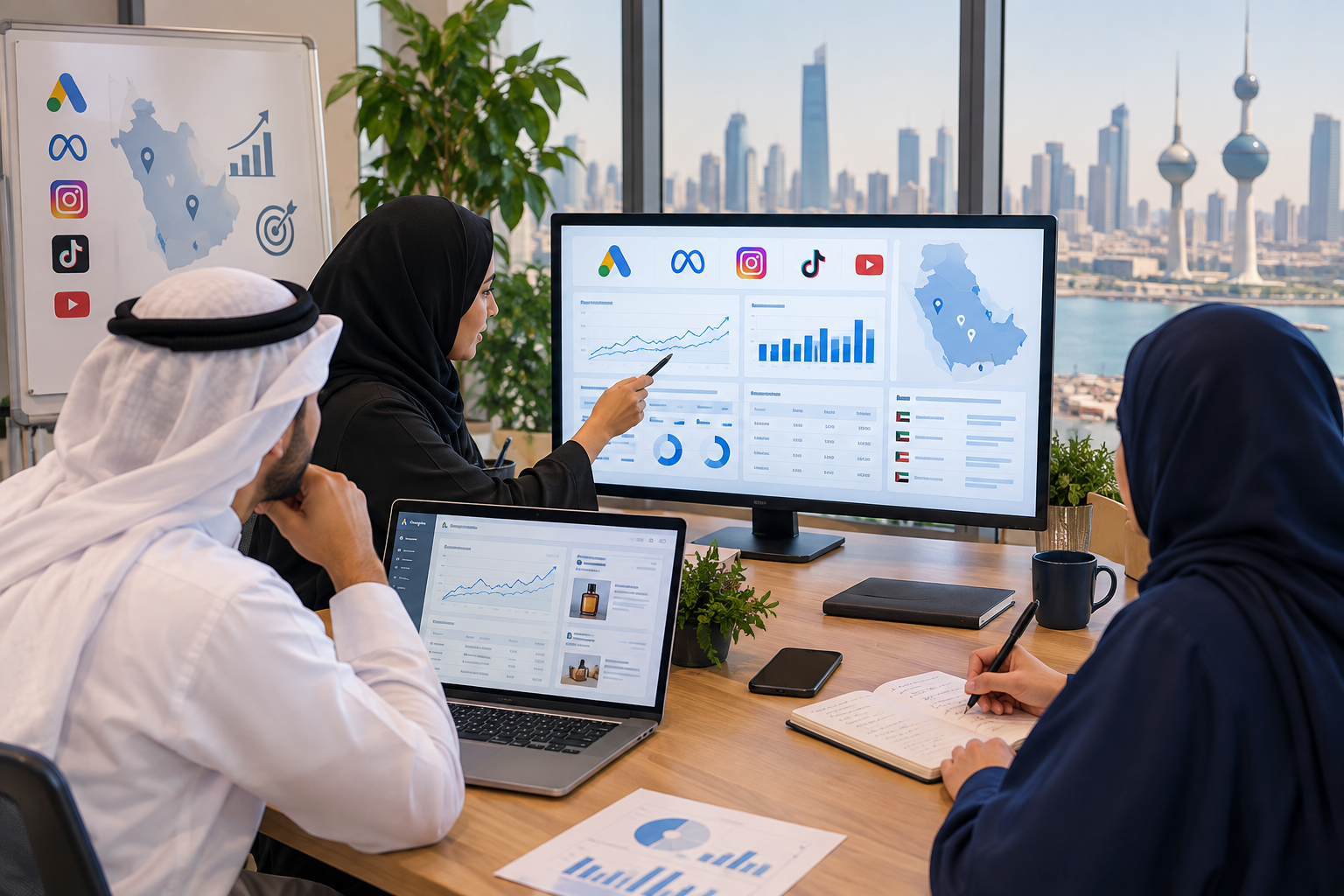
Choosing a paid advertising company in the Gulf should not be based on the number of campaigns an agency runs or promises of immediate sales growth. The right partner understands differences between markets, audiences, and platforms, then connects advertising spend to measurable objectives. A Kuwaiti brand may need to build demand, an online store may prioritize sales, and a service company may need qualified leads. This guide explains how to compare providers and choose a partner that supports growth rather than simply launching ads.
When does your business need a paid advertising company?
In-house management can work when you have experienced staff and enough time for analysis and testing. Specialist support becomes valuable when you are using multiple platforms, increasing spend, struggling to explain performance differences, or trying to connect campaigns with your website and sales process.
Define the primary objective first: product or service demand, qualified leads, e-commerce sales, a seasonal launch, or remarketing to previous visitors. A clear objective helps the agency choose the message, channel, and success metric.
What should you look for in a Gulf paid advertising company?
Market understanding, not just media buying
Paid campaigns depend on how customers make decisions in each market. What works in Kuwait may need adjustment for Saudi Arabia, the UAE, or Qatar. Purchasing power, seasons, audience behavior, and expectations differ.
Ask how the agency researches each audience and what it would adapt between markets. A good provider does not use the same creative and wording everywhere without testing local relevance.
Relevant experience
Review examples from sectors close to yours, but ask about the objective, timeframe, agency role, and measurement method. A fast-moving product campaign is different from a service campaign that must build trust before generating contact.
Ability to work across suitable platforms
The goal is not to be present on every platform. Search may suit a user with direct purchase intent, while social media can create awareness and demand. Professional networks may be more appropriate for some B2B services than entertainment-focused channels.
Transparent fees and budget control
Separate management fees from platform spend and production or influencer costs. You should know what the agency fee covers, how the media budget is controlled, and who owns the accounts and data.
Can the agency connect advertising to profit?
A strong agency does not treat higher spend as success. It considers average order value, margin, buying cycle, and the acceptable cost of acquiring a customer or sale.
Discuss lead quality, conversion tracking, attribution, when to pause weak ads, and how customer value differs across products and markets. If the proposal focuses only on reach and clicks, ask for a clearer commercial measurement plan.
Assess the creative and messaging strategy
Targeting alone does not make an ad work. The image, video, headline, offer, and landing page must support one another. Ask how ideas are developed, how many creative variations are included, how messages are tested, and who writes and designs the assets.
Gulf audiences may require language and cultural adaptation without relying on stereotypes or exaggerated claims. Test angles such as price, speed, quality, or convenience according to what matters to the audience.
Do not overlook the landing page
A campaign can be well managed and still underperform because the landing page is slow, unclear, or inconsistent with the ad promise. Check the headline, proof, call to action, form length, and mobile experience.
Ask about tracking before any ad goes live
Performance cannot be improved if it cannot be measured. Agree on conversion events, website or store integration, analytics tools, and privacy requirements.
Useful indicators may include cost per lead or purchase, landing-page conversion rate, return on ad spend when sales data is available, customer value by channel, frequency, and the difference between platform-reported results and actual sales records.
How are tests and optimizations managed?
Paid campaigns need a cycle of hypothesis, launch, measurement, and improvement. A meaningful test changes one understandable variable, such as creative, audience, offer, or landing page, so the reason for the difference can be identified.
Ask about the testing period, the amount of data needed, and how learning is documented. Campaigns should not be changed daily without evidence, but weak performance should not be ignored for too long.
What should a monthly report include?
A useful report explains decisions rather than displaying a long list of numbers. It should cover spend, results against the objective, top and weak creatives, lessons learned, and next steps. You should have access to the advertising accounts and data rather than relying only on screenshots.
Warning signs before signing
Guaranteed results without understanding your business or budget.
Focus on clicks while ignoring conversions.
Refusal to share account access or campaign data.
One generic approach for every market and platform.
Unclear production inclusions and extra charges.
Constant strategy changes without documentation or explanation.
Questions to ask in the first meeting
Ask what the agency will review first, which platform it would prioritize and why, how it would split the budget, what data it needs, and how it would respond to weak results. Request a concise direction that demonstrates its reasoning rather than a complete free campaign.
For a platform-specific perspective, see “How Can A2M Improve Your Facebook Advertising Campaign Results?” The article “How to Start a Successful Advertising Campaign from Kuwait with A2M” approaches campaign beginnings from a different angle.
When might A2M be the right partner?
If you need support across media planning, creative development, budget management, and performance analysis, explore A2M’s digital advertising service. Share your objectives, target markets, customer value, and available data to support a realistic plan.
Conclusion
The best paid advertising company in the Gulf is not the one that spends the most. It is the one that turns budget into learning and measurable outcomes. Compare providers by market understanding, relevant experience, creative capability, tracking discipline, reporting transparency, and data ownership. That is how paid media becomes part of a growth system rather than an expense that is difficult to explain.
Frequently Asked Questions
What is the difference between digital advertising and organic marketing?+
Digital advertising uses a budget to reach a selected audience quickly through search engines, social platforms, and other channels. Organic marketing builds visibility over time through content, SEO, and audience relationships without paying for every impression. Many businesses use both to balance immediate reach with long-term growth.
How do I choose the right advertising platform for my business?+
Start with audience behavior and campaign objectives rather than platform popularity. Search often suits users with clear intent, while social platforms can support discovery and demand creation. Test channels according to customer cost and quality, then invest more in the platform that meets your business goal.
How do I measure the success of my advertising campaign?+
Measure success against the agreed objective: sales, qualified leads, calls, or valuable visits. Track cost per conversion, conversion rate, lead quality, and return on ad spend when sales data is available. Do not rely on engagement or clicks alone if they do not lead to a commercial outcome.