September 7, 202615 min read
Graphic Design Services in Kuwait: From Visual Identity to Advertising Design
Discover the importance of graphic design services in Kuwait and how they help build a consistent visual identity, create effective advertising and digital content, and strengthen your brand’s presence across different channels.
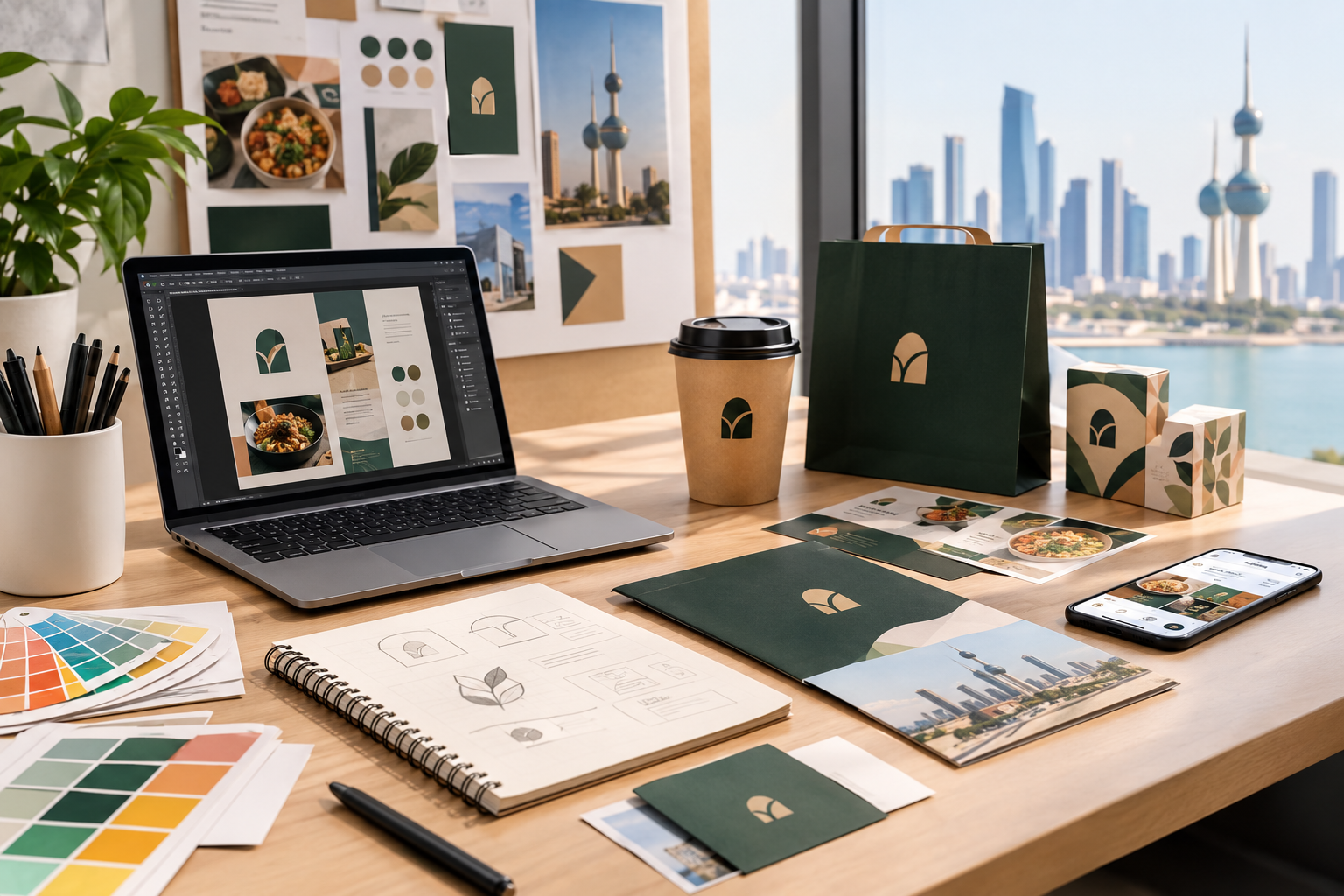
In Kuwait, retailers, restaurants, and emerging brands need more than a good product or service to attract customers. They need a clear visual language that helps people recognize the brand, understand its message, and remember it when making a purchase decision. This is where graphic design services in Kuwait become valuable, from visual identity and advertising design to digital content, packaging, and printed materials.
Graphic design is not limited to creating a logo or an attractive image for social media. It is a process that connects an idea with a message, an audience, and the channel where the design will appear. The visual result should serve a business objective rather than function as decoration alone.
What Is Graphic Design, and Why Is It Broader Than You Think?
Graphic design is the use of visual elements such as colors, images, typography, shapes, and layouts to communicate a specific message to a particular audience. It may appear on a storefront, a coffee cup, a poster for a local event, an Instagram advertisement, or a landing page for an online store.
For this reason, a graphic designer’s role is not limited to using design software. The designer must understand the purpose of the project, the audience, the brand personality, and the medium where the design will be displayed. A sign for a restaurant in Kuwait, for example, needs to be readable from a distance, while a digital advertisement for the same restaurant must capture attention quickly on a mobile screen and encourage the user to take action.
Essential Principles of Graphic Design
Balance: Organizing the elements
Balance distributes visual elements in a way that gives the design stability and clarity. It may be symmetrical, as in a formal and structured composition, or asymmetrical, as in an advertisement that places a large image next to a short text block. The objective is to guide the viewer’s attention without making one part of the design feel unnecessarily crowded.
Hierarchy: Guiding the viewer’s eye
Visual hierarchy determines the order in which people read and process the elements. The main headline should be clearer than secondary details, and the call to action should be visible without competing with the central message. In a restaurant promotion, for example, the hierarchy may begin with the offer, followed by the product image, price, and ordering method.
Alignment: Creating clear relationships
Alignment connects text, images, and spaces and makes a design feel organized even when it contains several elements. Using a clear grid in a menu or price list helps customers compare information quickly and reduces the feeling of visual clutter.
Repetition: Strengthening brand identity
Repetition does not mean copying the same design everywhere. It means using consistent elements such as colors, icon styles, image treatments, and typography. When these elements appear consistently across a website, social media posts, and packaging, the audience can recognize the brand more easily.
Contrast: Highlighting what matters
Contrast can be created through differences in size, color, weight, or spacing. It helps emphasize a price, date, button, or important piece of information. Excessive contrast, however, can make a design feel noisy, so it should be used to support the priority that viewers need to notice.
These principles are not separate from the business objective. The choice of layout, color, and typography depends on the message, audience, and medium, as well as whether the goal is to build trust, explain a service, or encourage a purchase.
Types of Graphic Design Services in Kuwait
Graphic design covers several specialized areas, and the right combination depends on the nature of the business and its current stage.
Visual identity design: Involves developing the logo, color palette, typography, image style, and guidelines that maintain brand consistency. A practical example is creating a unified identity for a restaurant across its storefront, menu, application, and social media.
Advertising and marketing design: Involves preparing digital and printed campaign materials while organizing the message, offer, and call to action. A practical example is designing a seasonal promotion that communicates the product, price, and ordering method within seconds.
Social media design: Involves producing templates, posts, stories, and advertisements that match platform dimensions and the brand identity. A practical example is creating a set of templates that supports consistent publishing without making the account feel random.
Print design: Involves designing brochures, booklets, menus, business cards, stickers, and point-of-sale materials. A practical example is designing a clear menu that is easy to read in the restaurant or through a QR code.
Packaging design: Involves developing the visual appearance of the package, label, and product information. A practical example is designing packaging for a local product that highlights the name, ingredients, and usage instructions on the shelf.
Digital design and user interfaces: Involves creating visual elements for websites, online stores, and applications while considering clarity and usability. A practical example is designing a campaign landing page that guides visitors toward registration or purchase.
Motion graphics and visual content: Involves turning an idea or information into a short video or motion graphic for digital channels. A practical example is creating a short video that explains how to use a product or book a service.
A brand may need one service at the beginning or a complete set of services. What matters is that the elements work together visually and support a clear objective rather than producing a large number of disconnected designs.
Why Does Your Business Need Professional Graphic Design?
To communicate the message quickly
Users are exposed to a large number of advertisements and posts every day. Good design helps them understand what the brand offers, who the service is for, and what action they should take next. An advertisement may contain an attractive image, but if the headline is unclear or the ordering method is difficult to find, much of its value is lost.
To stand apart from competitors
Two restaurants may offer similar products, but their photography, packaging, colors, and menu presentation can make each brand feel different. Differentiation does not require unusual colors or complicated elements. It requires a visual system that reflects the nature of the business and makes it easier to remember.
To create a consistent experience across channels
When a customer sees a brand in an advertisement, visits its social media account, and then opens its website, the experience should feel connected. Consistency in the logo, colors, typography, and imagery reduces confusion and makes communication more professional.
To support marketing campaigns
Design is not separate from marketing. It helps highlight an offer, communicate a benefit, and direct attention toward a call to action. For this reason, the designer should work with the content and marketing teams to understand the campaign objective, audience, and stage.
How to Choose a Graphic Design Company in Kuwait
Review the portfolio analytically
Do not look only at whether the designs are attractive. Ask whether the company has completed work for businesses similar to yours, whether its styles vary according to each client’s identity, and whether it shows complete identity systems rather than isolated logos. A diverse portfolio helps you evaluate the team’s ability to solve different problems rather than repeat one visual style.
Understand the scope and deliverables
Before starting, ask what the project includes: the number of concepts, revision rounds, final files, formats for print and digital use, and a brand guideline document if applicable. These details reduce the risk of different expectations during the project.
Ask about the timeline and communication process
The project stages should be clear, from information gathering and concept development to approval and final delivery. The client should also know who is responsible for communication, how feedback will be shared, and how long each stage is expected to take.
Make sure the style fits your brand
Not every attractive design is suitable for every business. A brand targeting families may require a different visual language from a B2B company or a luxury product store. Choose a team that listens to your objectives and explains its choices instead of simply creating a style without connecting it to the audience.
Check the team’s ability to work across disciplines
A project may require collaboration between a designer, copywriter, marketing specialist, web developer, or photographer. An integrated team—or a clear collaboration process—helps maintain consistency between the design, campaign, website, and other customer touchpoints.
Why Choose A2M for Graphic Design Services??
A2M develops design solutions connected to the brand’s objective rather than producing isolated images without context. The process begins by understanding the business, audience, and channels where the design will appear, followed by defining the required deliverables and how they will be used.
The A2M team combines design expertise with an understanding of digital marketing. This supports the development of visual identities, advertising materials, social media content, and digital elements within one consistent visual direction. When needed, the design work can also be coordinated with website development, content, advertising, and SEO services.
A project should not be judged by claims of being “the best” or by the number of promises made. Its value depends on how well the solution fits the brand, how clearly the deliverables are defined, and whether the final assets can be used effectively across the required channels. A2M therefore focuses on understanding the need, defining the scope, and delivering designs that serve the intended purpose.
Conclusion
Graphic design services in Kuwait help transform a business’s identity and messages into a clear and consistent visual experience, from the first advertisement a customer sees to the packaging, website, and social media accounts. Start by defining what you need, then review the portfolio, deliverables, and working process before choosing a design company.
If you are looking for visual identity design, advertising materials, or digital content tailored to your business, contact the A2M team to discuss your needs and define a clear scope of work.
Frequently Asked Questions
Do I need a graphic designer if I already have an in-house marketing team?+
Not necessarily, as the choice does not always have to be between an internal team and an external agency. Your marketing team may need specialized support with branding, packaging, or visual content during a specific period, or it may work with an external designer to manage a high volume of projects. The right decision depends on the workload, available skills, timeline, and budget.
How much does a complete visual identity design cost?+
The cost depends on the project scope. It may include only a logo, colors, and typography, or extend to a comprehensive brand guideline document and applications across packaging, print, and social media. For a realistic estimate, define the deliverables, number of concepts, revision rounds, and required applications before agreeing on a price.
Does graphic design include print design?+
Yes. Graphic design services may include printed materials such as menus, brochures, business cards, stickers, and signs. Confirm that the files will be prepared in the appropriate sizes and formats for printing. Production details such as paper type and finishing should also be clearly defined if they are included in the project scope.
Can the same design be used on every platform?+
The same concept and visual identity can be maintained, but the design should usually be adapted to each channel. An Instagram post may require a different size and layout from a story advertisement, storefront sign, or website banner. Consistency does not mean copying the same file without modification.