October 26, 202616 min read
Logo vs Visual Identity vs Brand: What Business Owners in the Gulf Need to Know
Learn the difference between a logo, a visual identity and a brand, with comparisons and practical examples for business owners in Kuwait and the Gulf.
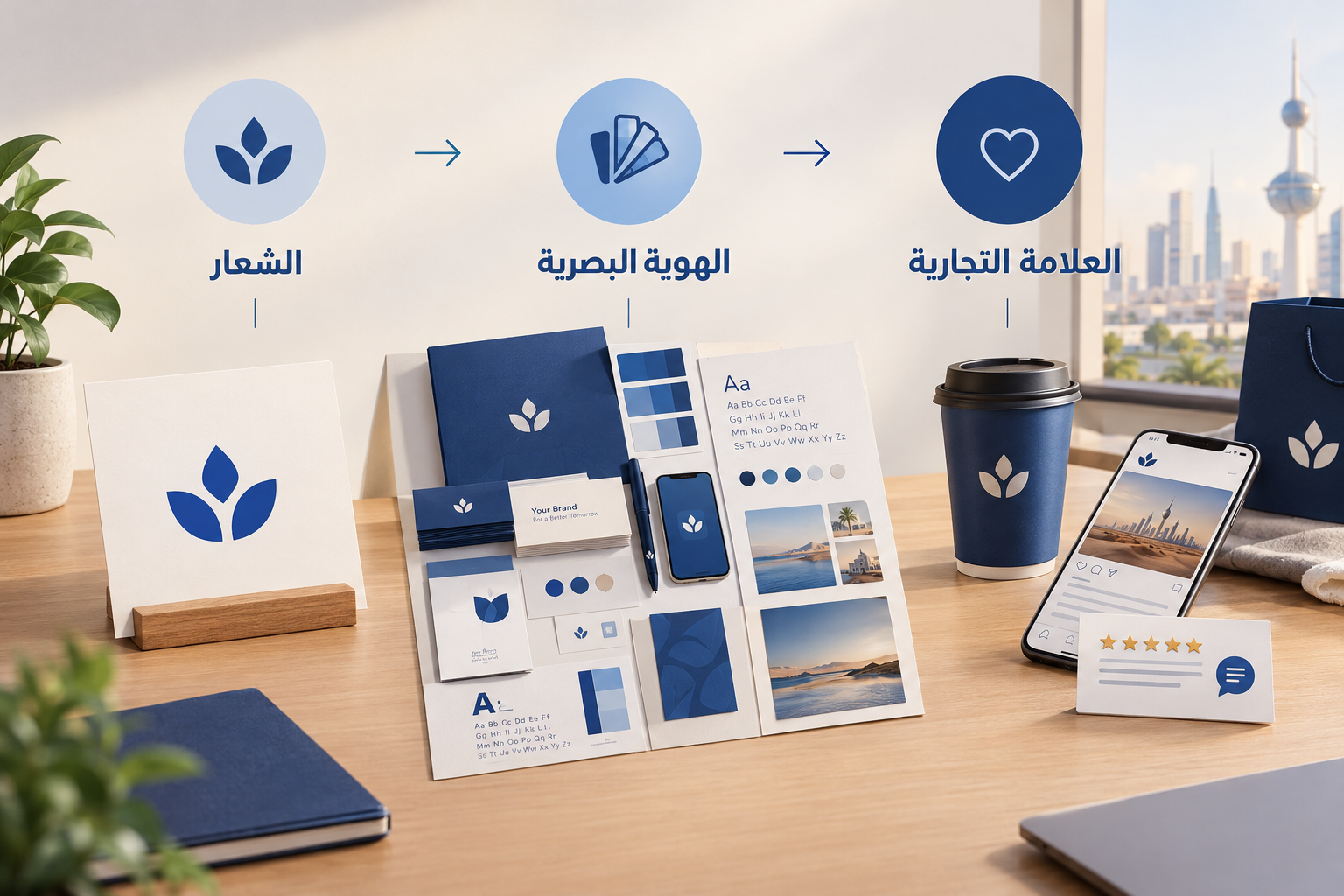
A founder walks into an agency in Kuwait City, Riyadh or Doha and says, "I need a brand for my business." A few questions later, it turns out they want a logo. The mix-up is common across the Gulf, where new businesses launch every week and the words logo, identity and brand are used almost interchangeably. They are not the same thing, and confusing them affects your budget, your timeline and the result you end up with.
The difference between a logo, a visual identity and a brand comes down to this: a logo is a single mark, a visual identity is a system of visual elements, and a brand is the full impression people form about your business. This guide explains each one, compares them side by side, and helps you decide what your business needs right now.
The Short Answer
Logo: one visual mark, a wordmark, a symbol or both, that identifies your business.
Visual identity: the organized set of visual elements your brand uses: logo, colors, typography, patterns and image style.
Brand: what people feel and say about your business, including its reputation, values and customer experience.
The relationship is nested. A logo is one part of a visual identity, and a visual identity is one part of a brand. It never works the other way around.
What Is a Logo?
A logo is the smallest and fastest way your business introduces itself. Its job is to be recognized at a glance, whether it appears on a shop sign, an app icon or a product box.
Logos come in several forms:
Wordmark: the business name set in a distinctive typeface. It suits short, clear names.
Symbol or icon: a graphic with no text. It works best once the brand is already well known.
Combination mark: a symbol paired with the name. This is the most common choice for new businesses.
Lettermark: one or more initials from the name, useful when the full name is long.
A logo alone is enough when you are testing an idea or running a small, local operation. It stops being enough once your business appears on several channels, because you then need rules for colors, sizing and placement so it does not look different every time it is used.
What Is a Visual Identity?
If the logo is your name, the visual identity is how you dress and present yourself. It is the visual language that makes an Instagram post, a product label and a branch sign look like they come from the same business.
Components of a Visual Identity
The logo and its versions: horizontal and vertical layouts, a compact icon version, and variations for light and dark backgrounds.
Color palette: primary and secondary colors with exact values for print and screen.
Typography: one typeface for headlines and another for body text, covering both Arabic and Latin scripts.
Graphic elements: patterns, shapes and lines that give the brand a recognizable texture.
Image and icon style: guidelines for photography, lighting and iconography.
Brand Guidelines
Brand guidelines are a document that explains how to use these elements and how not to. Any business that works with more than one designer, printer or agency needs one, because it protects consistency when people change. Even a small business benefits from a short version of two or three pages.
Where the Identity Shows Up
A visual identity appears on stationery, social media, packaging, your website, signage and staff uniforms. Each application tests how flexible the identity is. If it looks consistent everywhere, it is a strong one.
Why the Gulf Market Needs Special Attention
Bilingual design is the biggest difference. Your logo and typography must work in Arabic and English at the same quality level, and the Arabic version should never feel like a late, literal copy of the Latin one. Local taste and cultural context matter too, in colors, imagery and tone. What works in one Gulf market may not land the same way in another.
What Is a Brand?
A brand is not something you design. It is something you earn. It is the picture that forms in your customers' minds from everything they see, hear and experience: product quality, how quickly you reply to messages, how fast an order arrives, and what people say about you when you are not in the room.
That is why two businesses can have equally good-looking logos while one enjoys far more trust. Its customer experience is better.
What Is Branding?
Brand is the outcome and branding is the process. Branding is the set of decisions and activities that shape the brand: defining your message and positioning, designing the identity, setting a tone of voice and organizing the customer experience. It is ongoing work, not a deliverable that ends when design files are handed over.
The Invisible Elements of a Brand
Mission, vision and values: why the business exists, where it is headed and which principles it will not compromise.
Brand personality and tone of voice: whether you speak formally or warmly, in simple Modern Standard Arabic or with a touch of local dialect.
Positioning and target audience: the place you hold in the minds of a specific group of customers compared with your competitors.
Customer experience: every touchpoint, from the first ad to after-sales support.
Logo, Visual Identity and Brand Compared
Logo: a single visual element with a narrow scope. A designer creates it, it typically takes days to a few weeks, and it has the lowest cost of the three.
Visual identity: a complete visual system with a medium scope. It is built by a designer under an art director or strategist, takes several weeks, and costs more than a logo alone.
Brand: an impression, an experience and a reputation, with the widest scope. The whole business creates it, through its team and its customers. It is never finished, and it is an ongoing investment rather than a one-time payment.
Actual costs vary with the size of the business, the number of applications and the target market, so ask for a quote based on your own needs rather than relying on general figures.
The simplest analogy: the logo is your name, the visual identity is your appearance and clothing, and the brand is your reputation and the impression people keep after meeting you.
Logo vs Brand: Common Mistakes
Believing a beautiful logo creates a successful brand. A logo gets attention, but customers stay because of the product, the service and the promise you keep.
Confusing identity with marketing. Identity defines how your brand looks. Marketing defines how it reaches people. A business needs both, and one does not replace the other.
Relying on ready-made templates. Templates look affordable, but the result often resembles dozens of other logos and can raise problems around usage rights and trademark registration.
Skipping the guidelines. Without them, every supplier improvises, and the identity falls apart within months.
Changing the identity constantly. Each major change weakens the familiarity customers have built. Gradual refinement works better than starting over every year.
Practical Examples from the Gulf Market
These are hypothetical cases that show how needs develop.
A startup: an online perfume store begins with a combination logo in Arabic and English. As it grows, it adds a color palette, typography and social media templates, then builds a tone of voice as its customer base expands.
A café or restaurant: here the identity goes beyond the logo to cups, menus, signage and staff uniforms. Visual quality is part of the experience, and consistency across branches builds trust.
A service company: a contracting or consulting firm needs an identity that looks solid on proposals and official correspondence. Its brand depends on reliability and meeting deadlines more than on decoration.
In all three cases the journey moves from logo to identity and then matures into a brand through time and experience.
What Does Your Business Need?
An idea still being tested: a simple logo, a color palette and two core fonts.
A new business preparing to launch: a full visual identity with short guidelines.
An existing business with inconsistent visuals: a unified identity and a usage guide.
A business whose audience or activity has changed: a rebrand, including a review of positioning.
Ask yourself three questions. Where will my brand appear over the next year? Will more than one team handle it? Can a potential customer tell what makes me different? Your answers point to the right scope.
Steps to Build a Complete Brand
Research the market and competitors to understand gaps and opportunities.
Define strategy and positioning, including message and audience.
Design the logo so it reflects the strategy rather than personal taste.
Build the visual identity with colors, typography and graphic elements.
Prepare brand guidelines to document the rules.
Apply and launch across your chosen channels.
Keep it consistent and review performance regularly.
How A2M Can Help You Build Your Brand
A2M Agency works with brands across Kuwait and the Gulf, from startups to established names. Our in-house creative team brings strategists, designers, editors and developers under one roof, so your message does not get lost between separate suppliers as it moves from idea to execution.
How We Work With You
We follow four clear stages:
Discovery: we learn your brand, audience, market and opportunities before any design begins.
Strategy: we build a roadmap covering positioning, message, content direction and the right channels.
Execution: we turn the strategy into a logo, a visual identity and ready-to-use applications.
Growth: we monitor performance and keep improving as your brand expands.
What We Can Offer Your Brand
Logo and visual identity design with balanced Arabic and English versions.
Brand guidelines that make it easy for your team and suppliers to stay consistent.
Messaging and tone of voice, applied across content and social media accounts.
Video and visual content production that reflects your brand's personality.
Search visibility through SEO strategy and well-planned content.
Why Local Understanding Matters
Gulf audiences differ in their digital habits, taste and dialect, so copying an experience from another market is risky. We start from the realities of the Kuwaiti and Gulf markets and build identities around what your customers understand and trust.
Browse our services and past work to see our approach. If you want to know exactly what your business needs, get a free consultation and our team will review your current situation and suggest the right next step.
Conclusion
In three points: the logo identifies you, the visual identity organizes how you appear, and the brand defines your place in your customers' minds. Start with what fits your stage, build gradually and stay consistent. If you need help deciding your next step, the A2M team is ready to discuss your business and prepare a proposal that fits your needs.
Frequently Asked Questions
Is a logo enough to launch my business?+
It is enough for an early launch or an idea test. As your channels grow and more people handle your brand, you will need an organized visual identity to keep everything consistent.
How much does visual identity design cost in the Gulf?+
It depends on the number of applications, the depth of strategic research, the number of revision rounds and the experience of the team. The best approach is to request a detailed quote after defining your scope of work.
How long does it take to build an identity?+
A logo usually takes from a few days to a few weeks. A full identity with guidelines takes several weeks, depending on how quickly feedback is approved and how many applications are needed.
What is the difference between visual identity and corporate identity?+
Visual identity covers the visual side of the brand. Corporate identity is a broader term some people use to include both visual and non-visual elements such as values and messaging, so it is close in meaning to the brand itself.
When should I rebrand?+
When your activity or target audience changes, when you merge with another company, or when your current identity no longer represents the level of your services. Boredom alone is not a good enough reason.